5 Essential Tips for Getting the Perfect Custom Fit Racing Suit
A Complete Guide to Precision, Comfort, and Performance
When it comes to motorsports safety and performance, nothing compares to a perfectly fitted custom racing suit. Unlike standard sizing, a custom-fit suit is designed around your exact body measurements, driving posture, and racing environment — giving you better mobility, improved comfort, and maximum protection.
But getting that perfect fit requires more than just sending in a few measurements. Precision matters. Even small mistakes can affect performance, comfort, and compliance with racing regulations.
Tip 1 — Take Measurements the Right Way
The most important step in creating a custom racing suit is accurate body measurement. Even a small measuring error can result in tight pressure points, excess fabric, or restricted movement.
For best results:
- Use a soft tailor's measuring tape
- Measure over light clothing or base layers
- Stand naturally — do not suck in or stretch
- Ask someone to help (never measure alone if possible)
- Record measurements carefully and double-check
Key measurements typically include:
- Chest circumference
- Waist circumference
- Hips circumference
- Inseam length
- Torso length
- Shoulder width
- Arm length
- Thigh circumference
Precision at this stage ensures the suit fits your body — not just a size chart.
Tip 2 — Measure in Your Driving Posture
One of the biggest mistakes drivers make is measuring only while standing upright. But you don't race standing up — you race seated, strapped in, and leaning forward. A racing suit must accommodate your actual driving position.
To get a true performance fit:
- Sit in a chair similar to your race seat
- Bend arms as if holding the steering wheel
- Slightly flex knees and torso
- Check how the suit will stretch across shoulders and back
This helps prevent tightness in the shoulders, pulling at the crotch, or bunching around the waist during real driving conditions.
Tip 3 — Account for Base Layers & Safety Gear
Your racing suit is rarely worn alone. Many drivers wear fire-resistant underwear, cooling shirts, rib protectors, back supports, and communication harnesses. If your measurements don't consider these layers, your suit may feel tight and restrictive on race day.
When ordering a custom suit:
- Measure while wearing typical base layers
- Inform the manufacturer about extra safety gear
- Allow slight room for airflow and movement
A well-designed custom suit balances snug fit with functional space.
Tip 4 — Choose Mobility Zones & Stretch Panels Strategically
A perfect fit isn't just about size — it's about movement. Racing requires constant steering input, pedal work, and upper body rotation. Without proper flexibility zones, even a correctly sized suit can feel restrictive.
Look for custom suits that include:
- Stretch panels in shoulders and lower back
- Pre-curved arms for steering posture
- Flexible knee construction
- Articulated elbows
- Ergonomic torso shaping
These features reduce fatigue and improve reaction time — especially during long races.
Tip 5 — Verify Certification Fit Requirements
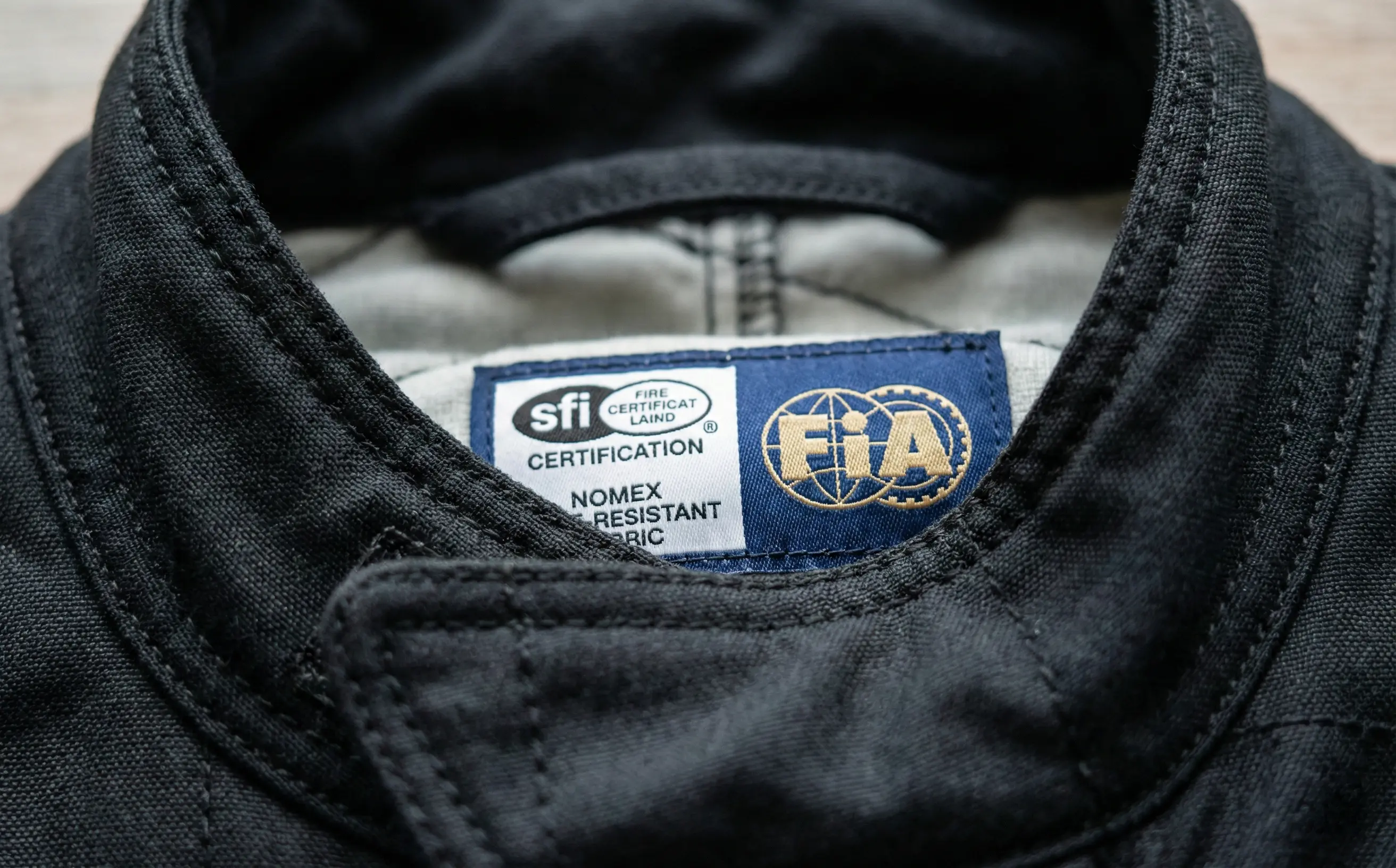
Professional racing suits must meet safety standards set by organizations like the SFI Foundation Inc. Certification rules don't just apply to materials — they also affect construction and fit.
A suit that is too tight may reduce insulation effectiveness. A suit that is too loose may interfere with safety harnesses.
Before finalizing your custom order:
- Confirm required SFI rating for your racing class
- Ensure proper layering structure is maintained
- Avoid over-tight tailoring that compresses insulation
- Verify compliance labeling placement
Bonus Tip
Always do a test fit before racing. Once your custom racing suit arrives, sit, twist, reach, and simulate driving movements. Pay attention to shoulder tension, back stretch, knee bending, neck comfort, and suit length when seated. If anything feels restrictive, it's best to adjust early rather than risk discomfort during competition.
Why a Perfect Custom Fit Matters
A properly fitted racing suit delivers real performance benefits:
- Better heat management
- Reduced fatigue during long races
- Improved mobility and control
- Proper safety layer function
- Professional appearance
- Greater confidence behind the wheel
Getting the perfect custom racing suit fit comes down to precision, planning, and understanding how your body moves on the track. When your racewear fits perfectly, you gain freedom of movement, reliable protection, and the confidence to focus fully on performance.
And in racing, confidence is everything.