TPP Rating Explained — What Thermal Protective Performance Actually Measures (And Why It Matters More Than SFI)
The hidden number behind every SFI rating, broken down for racers who want to know what's really protecting them.
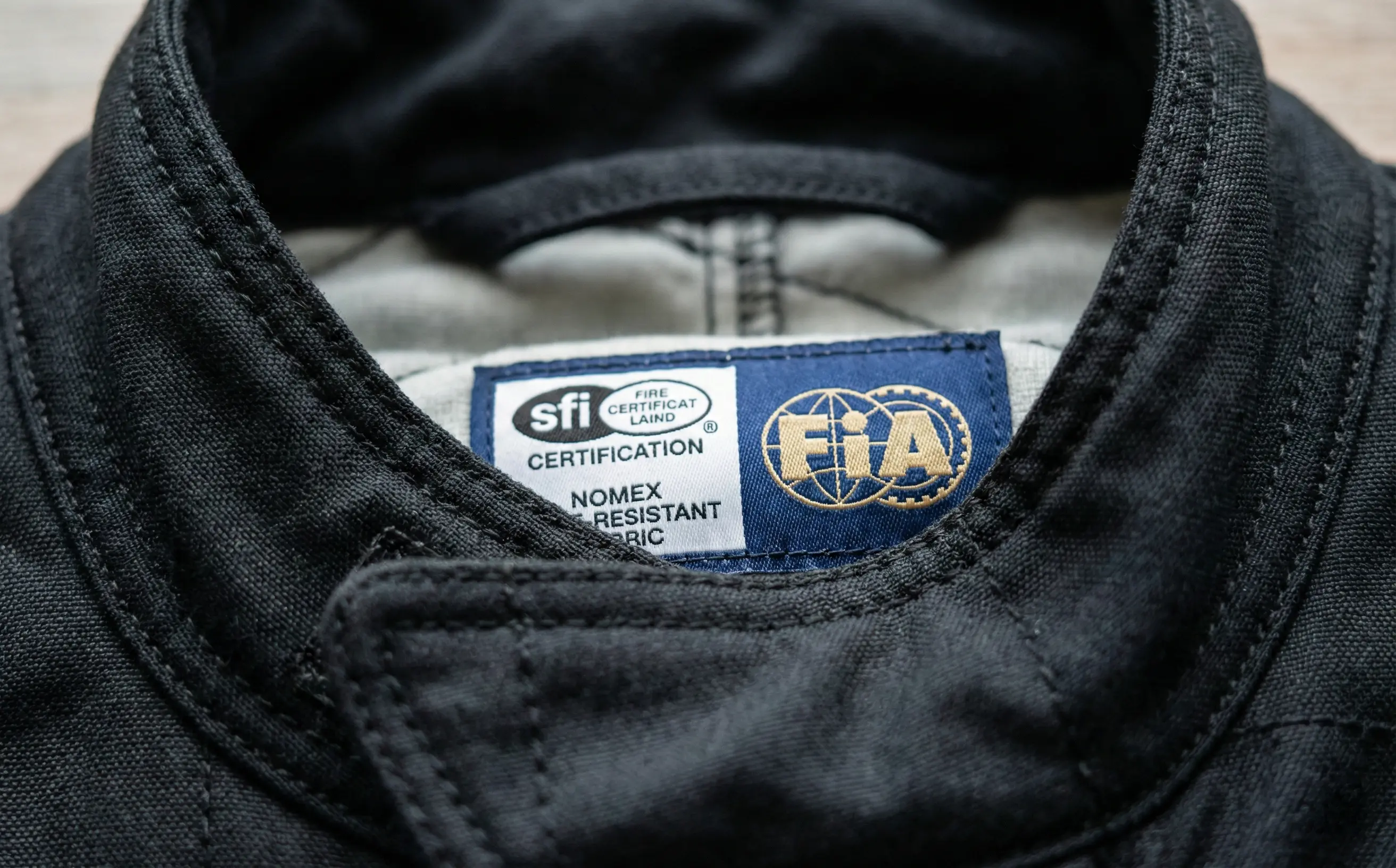
Every racing suit has an SFI rating. SFI 3.2A/1. SFI 3.2A/5. SFI 3.2A/15. Most racers know what these mean: higher number, more protection. What most racers don't know — including some sanctioning body tech inspectors — is that the SFI number isn't actually the measurement. It's a classification tier based on another number called TPP, or Thermal Protective Performance. TPP is what's really being tested. SFI is just the label.
This matters because two suits with the same SFI rating can have meaningfully different TPP scores — and therefore meaningfully different real-world protection. This guide explains exactly what TPP measures, how it's calculated, why it varies within an SFI tier, and what to look for when comparing racing suits at the spec-sheet level. If you've already read our SFI Ratings Explained guide, this is the next layer down — what's inside that label.

What Is TPP (Thermal Protective Performance)?
Thermal Protective Performance is a laboratory measurement of how long a fabric or garment can protect human skin from second-degree burns when exposed to a controlled heat source. The test was originally developed for firefighter turnout gear in the 1970s and adopted by the SFI Foundation for motorsport applications shortly after.
Here's the test, simplified:
- A fabric sample is mounted in a test stand
- A propane-burner heat flux of 2.0 cal/cm²/sec is applied to one side
- A copper calorimeter behind the fabric records the time it takes for enough heat to pass through to cause a second-degree burn on human skin
- That time, in seconds × 2, is the TPP value
A TPP of 6 means roughly 3 seconds of protection. A TPP of 20 means roughly 10 seconds. Higher TPP = more time before serious injury.
Three seconds doesn't sound like much. But in a real cockpit fire, three seconds is the difference between getting your harness off and not. SFI 3.2A/1 with TPP 6 has saved racers' lives. SFI 3.2A/5 with TPP 20 has saved many more.
SFI Rating vs TPP — How They Relate
SFI ratings are tiers. TPP is the underlying score. The SFI Foundation sets a minimum TPP for each tier:
- SFI 3.2A/1 — minimum TPP of 6 (roughly 3 seconds of protection)
- SFI 3.2A/3 — minimum TPP of 14 (roughly 7 seconds of protection)
- SFI 3.2A/5 — minimum TPP of 19 (roughly 9–10 seconds)
- SFI 3.2A/10 — minimum TPP of 38 (roughly 19 seconds)
- SFI 3.2A/15 — minimum TPP of 60 (roughly 30 seconds)
- SFI 3.2A/20 — minimum TPP of 80 (roughly 40 seconds)
Here's the key point most racers miss: these are minimums, not exact values. A suit can be SFI 3.2A/5 certified with a TPP score of 19, 22, 25, or even higher. The SFI tier is the floor; the actual TPP can be anywhere above it.
Why Two SFI 3.2A/5 Suits Can Have Different TPP Scores
Three factors drive how much TPP a suit actually delivers above its SFI minimum:
- Material choice. Genuine Nomex® meta-aramid has higher inherent TPP than fire-retardant treated Proban cotton or polyester blends, even at the same layer count. A two-layer Nomex® suit can hit TPP 26+ where a two-layer Proban suit just clears 19.
- Layer construction and air gaps. Multi-layer construction with deliberate air gaps between layers traps insulating air, which raises TPP. Tightly-bonded multi-layer construction can actually score lower.
- Inner liner. A breathable knit inner liner adds TPP at the cost of weight. Some performance-focused suits skip the inner liner to save weight, which means they barely clear the SFI 3.2A/5 minimum.
This is why a $300 SFI 3.2A/5 suit and a $1,500 SFI 3.2A/5 suit are not the same product. The SFI label confirms both meet the minimum. The TPP score — when manufacturers publish it — tells you which one over-performs.
Buyer Tip
When comparing suits at the same SFI rating, ask the manufacturer for the actual TPP score. If they can't or won't tell you, the suit probably just clears the minimum.
What TPP Do You Actually Need For Your Discipline?
TPP needed for survival depends on fire risk — fuel type, fuel quantity, cockpit enclosure, and how long it takes to bail out. Practical TPP recommendations by discipline:
- Local autocross, track day: TPP 6+ (SFI 3.2A/1 minimum). Low fuel exposure, quick egress.
- Sprint car, dirt late model: TPP 19+ (SFI 3.2A/5 minimum). Methanol risk, open cockpit, sustained heat exposure.
- Drag racing (10.00+ ET): TPP 19+ (SFI 3.2A/5 minimum).
- Drag racing (9.99 ET and quicker): TPP 60+ (SFI 3.2A/15 minimum). Nitromethane risk, high-cone fire potential.
- Top Fuel / nitro classes: TPP 80+ (SFI 3.2A/20 minimum). Catastrophic fuel risk.
- Karting: TPP 6+ (SFI 3.2A/1 baseline via CIK Level 2). Abrasion is the primary risk, not fire.
- Road racing (SCCA/NASA): TPP 19+ (SFI 3.2A/5 minimum or FIA 8856-2018 equivalent).
For the full SFI rating breakdown by series and class, see our rating-by-discipline guide.
How to Find the Actual TPP Score of a Racing Suit
Most retailers list only the SFI rating. The actual TPP value is usually buried in the manufacturer's spec sheet or test report. Three places to check:
- Manufacturer spec sheet. Premium brands publish TPP. Budget brands omit it.
- SFI Foundation certification report. Available via the SFI website for some manufacturers. Confirms the lab-tested TPP at certification.
- Direct ask. Email or call the manufacturer. If they can't produce the number, that's information too.
At HS Race Gear, every custom suit ships with documentation listing the SFI rating, the TPP score, and the date of manufacture. Custom orders also let you specify materials (genuine Nomex® vs treated alternatives) which directly drives the final TPP.
How TPP Degrades Over Time (And What Reduces It)
The TPP a suit has on day one is not the TPP it has after a season of racing. Real-world TPP drops because of:
- UV exposure. Sunlight degrades Nomex® fibres slowly but measurably. A suit kept in a sunlit garage loses TPP faster than one stored in a closet.
- Repeated washing. Each wash cycle removes some fire-retardant treatment from treated fabrics. Genuine Nomex® is inherently fire-resistant and doesn't have this problem.
- Fuel and oil contamination. Hydrocarbons soaked into the fabric act as accelerants. Methanol specifically degrades Nomex® bonding agents.
- Heat cycling. Repeated cockpit-temperature cycles (cold start → hot session → cool down) accelerate fabric breakdown over many cycles.
- Abrasion. Worn shoulder panels and knee patches mean thinner fabric, lower TPP, more risk.
A 5-year-old suit with a valid SFI label still passes tech. Whether it still has its original TPP is a different question. If your suit has seen heavy use or contamination, the certification date doesn't tell the whole story.
TPP in FIA 8856-2018 — How the International Standard Compares
The FIA 8856-2018 standard — the international equivalent used by World Endurance Championship, IMSA, and SRO series — measures protection slightly differently than SFI. The FIA standard requires roughly TPP 35+ for compliance (in their HTI methodology, equivalent to about 12 seconds of protection), with the 2026 update increasing this from the previous 11-second standard.
Rough equivalence:
- FIA 8856-2018 ≈ SFI 3.2A/5 to SFI 3.2A/10 depending on manufacturer
- FIA 8856-2018 has stricter manufacturer documentation requirements
- FIA 8856-2018 includes thread strength and wash-durability testing that SFI doesn't
For amateur endurance racers comparing SFI vs FIA, see our endurance racing suit guide.
References & Standards
This guide draws on the following authoritative sources. Always verify against the current versions of these standards before competing:
- SFI Foundation — official SFI Spec 3.2A documentation (sfifoundation.com)
- NHRA Rulebook — current-year ET-to-rating ladder for drag racing
- FIA Sporting Regulations — Article 14 driver equipment requirements (FIA 8856-2018)
- USAC Technical Bulletin — Sprint Car, Silver Crown, and Midget series specifications
- NFPA 1971 — original TPP testing methodology (firefighter standard, adapted by SFI)