Dirt Track Racing Suit Requirements — IMCA, WISSOTA, USAC, World of Outlaws & DIRTcar (2026)
What SFI rating each dirt oval sanctioning body requires, broken down by class — street stock through winged sprint car
Dirt track fire suit rules are harder to pin down than drag racing rules, and not because the sport takes safety less seriously. Drag racing has one dominant sanctioning body publishing thresholds tied to a single number everyone already knows — your elapsed time. Dirt oval has half a dozen sanctioning bodies, hundreds of independent weekly tracks, and classes that share a name but not a rulebook. A “modified” at an IMCA track and a “modified” two states over may be inspected against completely different equipment rules.
The result is that most racers end up guessing, or buying whatever the guy in the next pit stall is wearing. This guide pulls the requirements together in one place — what each major dirt sanctioning body asks for, how that maps to your class, and the details tech inspectors actually check beyond the rating number itself.
Quick Answer: Most weekly dirt classes — street stock, hobby stock, b-mod — require at minimum an SFI 3.2A/1 single-layer suit. Sprint cars under World of Outlaws and ASCS require SFI 3.2A/5 with a valid label visible on the outside of the suit, plus SFI 3.3 gloves and shoes. Late models and premier modified classes commonly sit at 3.2A/5. Your track’s rulebook overrides all of it.
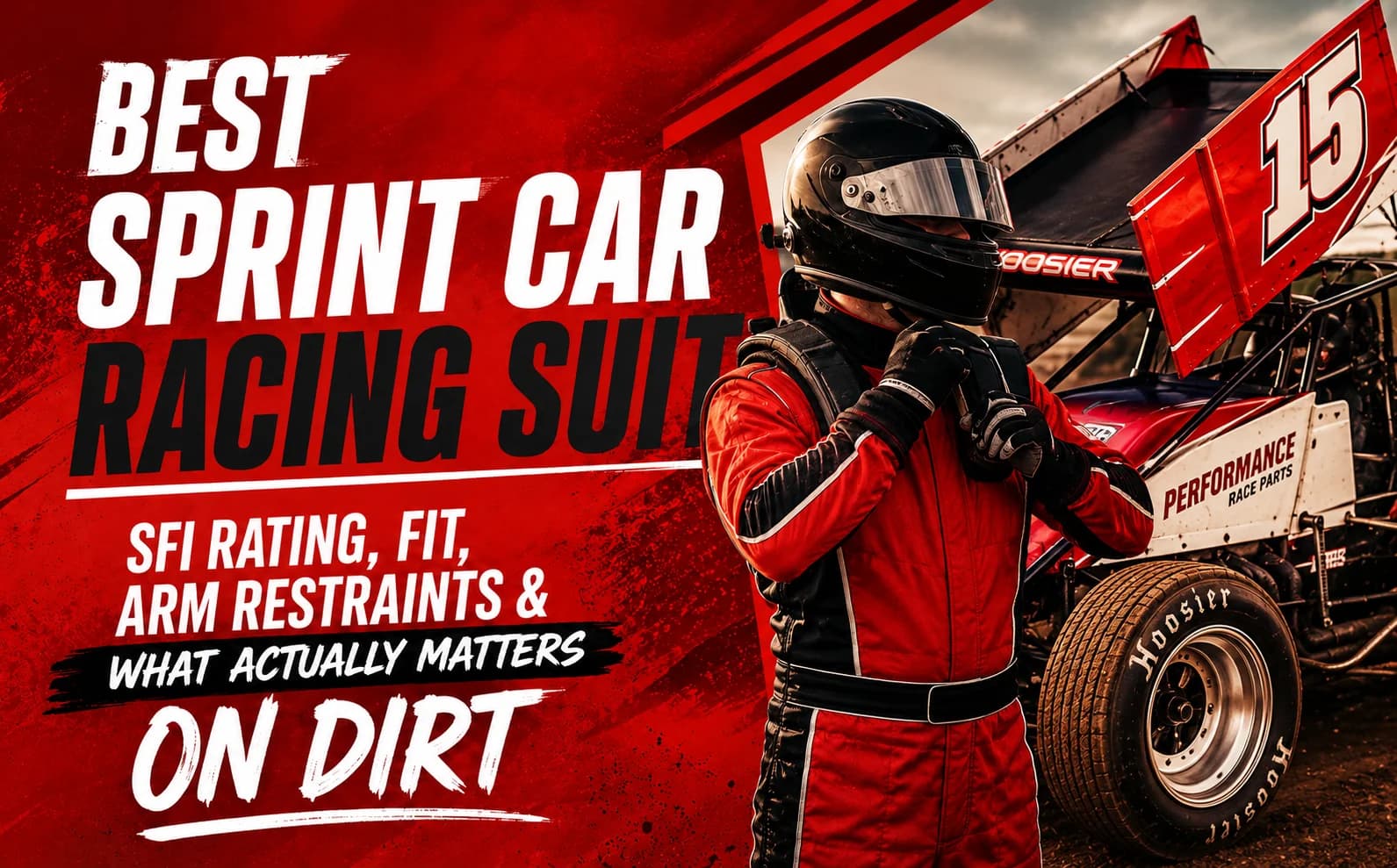
Sprint car classes carry the strictest dirt oval fire suit requirements — SFI 3.2A/5 is the common floor.
Why Dirt Oval Rules Don’t Look Like Drag Racing Rules
In drag racing, fire risk scales predictably with elapsed time. A quicker car carries more fuel pressure, more power adders and more nitro, so NHRA can tie suit ratings directly to ET and be roughly right every time.
Dirt doesn’t work that way. A 600-horsepower sprint car and a 350-horsepower street stock can run the same quarter-mile bullring on the same night. What changes the risk profile isn’t speed so much as fuel type, fuel cell position, and how likely the car is to end up on its lid. Sprint cars burn methanol, run a fuel cell directly behind the driver, and flip more often than anything else in oval racing. That combination — not lap time — is why sprint car rules are the strictest on dirt.
There’s a second complication worth understanding before you buy. Methanol burns with a nearly invisible flame in daylight. A methanol fire can be fully involved and difficult to see from the flagstand or from inside the car. That is precisely why sanctioning bodies running methanol classes specify multi-layer suits rather than single-layer: the assumption built into the rule is that it may take longer than usual for anyone to realise the car is on fire. If sprint car is your class specifically, our sprint car racing suit guide goes deeper on methanol protection, arm-restraint compatibility and dirt-versus-asphalt fit than this overview does.
Dirt Track Fire Suit Requirements by Sanctioning Body
The table below reflects each body’s published baseline for driver uniforms. Read it as a starting point for which suit to shop for, not as tech-inspection gospel — see the warning underneath it.
| Sanctioning Body | Primary Classes | Suit Minimum | Gloves / Shoes |
|---|
| World of Outlaws / ASCS | Winged & non-winged sprint car | SFI 3.2A/5, valid label visible on the outside of the suit | SFI 3.3 gloves and shoes, valid labels |
| USAC | National sprint, midget, Silver Crown | Multi-layer SFI 3.2A — check the current appendix for your division | Fire-resistant gloves and shoes required |
| IMCA | Modified, stock car, sport mod, hobby stock | SFI-approved full fire suit (rating not always tier-specified) | FR gloves and shoes, plus neck brace or head-and-neck restraint |
| WISSOTA | Modified, late model, street stock, midwest mod | SFI-approved fire suit — confirm the tier in the current rulebook | FR gloves and shoes required |
| DIRTcar | Late model, big-block modified, pro stock | Varies by series; premier divisions commonly SFI 3.2A/5 | FR gloves and shoes required |
| Independent weekly tracks | Entry-level and support classes | Commonly SFI 3.2A/1 minimum | FR gloves typically required, shoes often recommended |
Check the rulebook before you buy. Dirt tech rules are revised annually, and an individual track can — and frequently does — impose requirements stricter than its sanctioning body’s baseline. Two tracks running the same IMCA class can inspect to different standards. Pull the current PDF for your track and your division, and if a line is ambiguous, call the tech director. Five minutes on the phone is cheaper than a suit that won’t pass.
What You Need by Class
Most racers arrive at this question from their class rather than their sanctioning body, so here is the same information reorganised the way people actually shop.
- Hobby stock, street stock, pure stock — SFI 3.2A/1 is the usual floor. Gasoline-fuelled, lower speeds, entry-level budgets. A well-fitted single layer is legal nearly everywhere at this level.
- Sport mod, b-mod, midwest mod — SFI 3.2A/1 minimum at most tracks, with 3.2A/5 increasingly common as the class gets faster. If you plan to move up, buying the 3.2A/5 now saves buying twice.
- Modified (IMCA, UMP, big-block) — 3.2A/1 satisfies many weekly rulebooks, but premier and touring events frequently require 3.2A/5. Check the specific event, not just the weekly show.
- Dirt late model — SFI 3.2A/5 is the practical standard. Crate and limited classes sometimes permit 3.2A/1, but touring late model series generally do not.
- Sprint car and midget — SFI 3.2A/5 minimum under World of Outlaws and ASCS, with SFI 3.3 gloves and shoes. Methanol and the fuel cell position behind the driver make this the least negotiable category on dirt. Full detail in the sprint car suit guide.
If you want the layer-by-layer detail behind these numbers, the SFI rating chart breaks down every tier, and TPP ratings explained covers the thermal score that sits underneath each rating.
What Tech Inspection Actually Checks
Racers focus on the rating number. Inspectors check four things, and the rating is only the first.
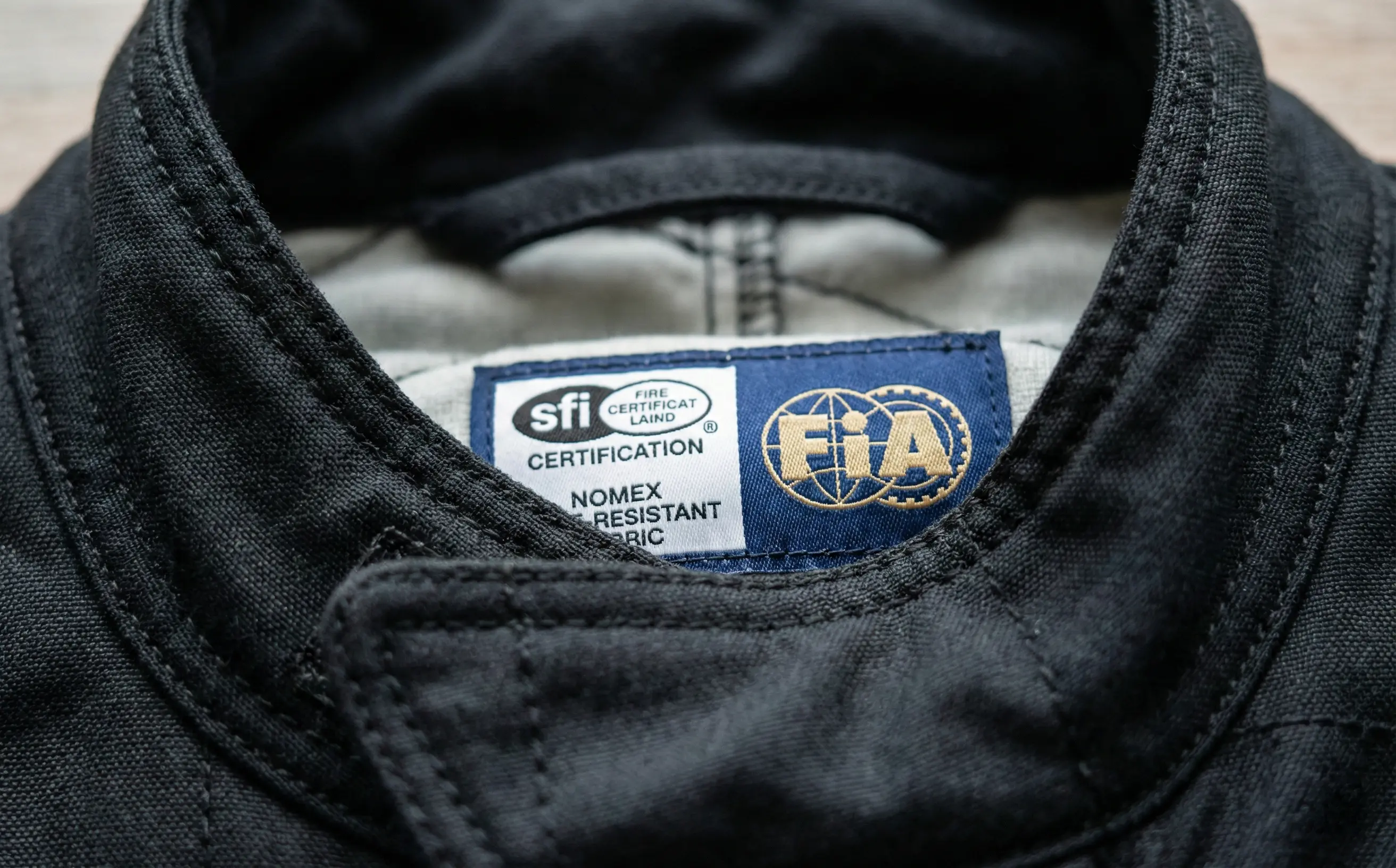
- A valid, legible SFI label. World of Outlaws specifies the label must be visible on the outside of the suit. A rating you can’t prove is a rating you don’t have — if the label has worn off or been cut out, the suit fails regardless of what it actually is.
- The manufacture date, not the purchase date. SFI certification on a driver suit expires five years from the date printed on the sewn-in label. A suit that sat in a shop for two years before you bought it gives you three seasons, not five.
- Condition. Tears, burn marks, oil saturation and heavy abrasion all compromise fire resistance. Dirt is unusually hard on suits, and a visibly degraded suit can be failed even inside its certification window.
- The rest of the package. SFI 3.3 gloves and SFI 3.3 shoes carry their own labels and their own expiry dates. Plenty of drivers pass on the suit and get stopped on the gloves.
Buying a Suit That Survives a Dirt Season
Dirt asks things of a fire suit that road racing never does, and the advice written for pavement doesn’t all transfer.
- Washing is the hidden enemy. Dirt suits get washed far more often than pavement suits, and repeated washing — especially with bleach or fabric softener — degrades fire-resistant treatment on some fabrics. Inherently fire-resistant material like Nomex keeps its protection through washing because the resistance is in the fibre itself, not applied to it. On a dirt schedule that difference compounds fast.
- Colour choice is a practical decision, not just a cosmetic one. White and light colours look superb for one heat race. Dark bases with lighter accents stay presentable across a season of clay.
- Fit matters more when you’re climbing through a window. Sprint car and modified drivers get in and out through tight openings, often in a hurry. A suit cut too generously bunches at the shoulders and catches; one cut too tight restricts the reach you need to get out. Cut-to-measure removes the compromise.
- Buy for the class you’re moving to. Upgrading from 3.2A/1 to 3.2A/5 mid-season because you stepped up a division means paying twice. If a move up is plausible within the suit’s five-year window, start at 3.2A/5.
Building for a specific discipline? Custom sprint car suits and custom dirt late model suits are both cut to your measurements in your team colours, with sponsor logos included.
Frequently Asked Questions
What SFI rating do I need for dirt track racing?
It depends on your class. Entry-level dirt classes like street stock and hobby stock generally require SFI 3.2A/1 as a minimum. Dirt late models and premier modified classes commonly require SFI 3.2A/5. Sprint cars under World of Outlaws and ASCS require SFI 3.2A/5 with a valid label displayed on the outside of the suit, along with SFI 3.3 gloves and shoes. Always confirm against your track’s current rulebook, because individual tracks often exceed their sanctioning body’s baseline.
Does IMCA require a specific SFI rating?
IMCA rules require an SFI-approved full fire suit across its divisions, along with fire-retardant gloves, shoes and a neck brace or head-and-neck restraint. The rulebook does not always name a specific tier the way sprint car series do, which means the practical floor is set by your track. Many IMCA racers run SFI 3.2A/1; those in faster divisions or chasing touring events typically run 3.2A/5.
Can I use my drag racing suit for dirt track?
Usually yes. SFI 3.2A is the same standard across both disciplines, so an SFI 3.2A/5 suit that passes NHRA tech will satisfy most dirt oval requirements as well. The things to verify are the certification date and the condition of the suit, plus whether your dirt series requires the label to be externally visible. The practical difference is durability rather than legality — a suit built for occasional drag use will age quickly on a weekly dirt schedule.
Why do sprint cars require a higher rating than street stocks?
Three reasons stack up. Sprint cars burn methanol, which burns with a nearly invisible flame in daylight and can delay anyone noticing a fire. The fuel cell sits directly behind the driver. And sprint cars roll over more frequently than any other dirt class. The rule anticipates a fire that takes longer to spot and a driver who may take longer to get out, so it specifies the multi-layer suit that buys roughly ten seconds of protection rather than the three seconds a single layer provides.
How long is a dirt track fire suit good for?
SFI certification expires five years from the manufacture date printed on the sewn-in label, and inspectors check that date rather than your receipt. Dirt racing adds a second clock: heavy soiling, frequent washing and abrasion can degrade a suit’s protection well before the certification runs out. A suit with tears, burn marks or oil saturation can be failed at tech even inside its five-year window.
Do I need fire-resistant underwear for dirt racing?
It is rarely mandatory in dirt oval rulebooks the way it can be in road racing, where SCCA permits an SFI 3.2A/1 suit only when worn with fire-resistant underwear. On dirt it is a genuine upgrade rather than a requirement: FR underlayers add meaningful protection time under a single-layer suit, and most drivers running 3.2A/1 in a faster class would be better served either adding underlayers or moving up to 3.2A/5.
Custom Dirt Track Suits Built to Your Measurements
HS Race Gear has been building SFI-certified custom fire suits in the USA for over ten years, and dirt oval racers are a large part of who we build for. Every suit is cut to your measurements rather than pulled from a size run, built from Nomex-blend fire-resistant fabric, and carries a current SFI label that will pass tech at IMCA, WISSOTA, USAC, DIRTcar and World of Outlaws events.
Single layer SFI 3.2A/1 for a weekly street stock, or a full SFI 3.2A/5 package with matching SFI 3.3 gloves and shoes for a sprint car — either way you get a digital mockup before production, unlimited revisions, your colours and sponsor logos, and free shipping. Custom suits start at $329.
Sources and further reading: SFI Foundation specifications, IMCA rulebooks, WISSOTA driver information, DIRTcar series rules. Requirements summarised here reflect published rules as of September 2026 and are revised annually — always verify against the current rulebook for your track and division.