Aftermarket Racing Suits: When to Upgrade From Stock Gear (And What to Look For)
From OEM-grade to professional protection — how aftermarket auto racing suits work, and how to pick the right one.
In most performance industries, "aftermarket" means upgrading from the basic equipment that came with the car. In racing, the term gets used a little differently — there's no factory-issued race suit you start with. What people usually mean by an "aftermarket auto racing suit" is moving up from an entry-level off-the-shelf suit to something purpose-built: higher SFI rating, better materials, better fit, real protection for the discipline you actually race.
If you're searching for an aftermarket racing suit, you're almost always one of two people: someone who started with a budget suit and outgrew it, or someone whose sanctioning body just bumped the minimum SFI rating and your current gear no longer passes tech. Either way, the decision tree below is for you.
What "Aftermarket" Actually Means in Racing
In automotive aftermarket — exhausts, cold-air intakes, suspension — "aftermarket" means a part made by someone other than the original manufacturer. Racing gear doesn't have OEM the same way. Every race suit is technically aftermarket because there's no factory-issued option. What the term has come to mean in motorsport:
- A suit you bought yourself rather than one provided by your team or series
- An upgrade from a starter-grade SFI 3.2A/1 suit to 3.2A/5 or higher
- A move from a generic off-the-rack fit to a properly-sized or custom-cut suit
- A move from polyester or cotton-blend fabrics to genuine Nomex® meta-aramid construction
If you're considering an aftermarket racing suit, the real question isn't "aftermarket vs. OEM." It's "what level of SFI protection do I actually need, and is my current suit holding me back?"
Five Reasons Racers Upgrade to a Better Suit
Most upgrade decisions come down to one of five drivers:
- Tech inspection failure or new series rules. Your sanctioning body raised the minimum SFI rating, your label is worn off, or your TPP score no longer meets the class minimum.
- You moved up a class. Going from local autocross to wheel-to-wheel road racing, or from sportsman drag to a faster class, raises the fire risk and the rating you need.
- Comfort is killing your performance. A poorly-fit suit binds at the shoulders or rides up in the seat. Lap times drop because you're fighting the suit instead of the car.
- Material degradation. Heat, sweat, washing, and UV all degrade SFI-rated materials. Cheap polyester-blend suits visibly age inside a season. Nomex® lasts dramatically longer.
- Resale value of a team identity. Sponsors and teams want the suit to look the part. A custom-printed suit with team livery does more than a generic black-and-red off-the-rack option.
What to Look For in an Aftermarket Racing Suit
Five things matter, in order. If a suit fails any of the first three, skip it regardless of price.
1. SFI Rating (non-negotiable)
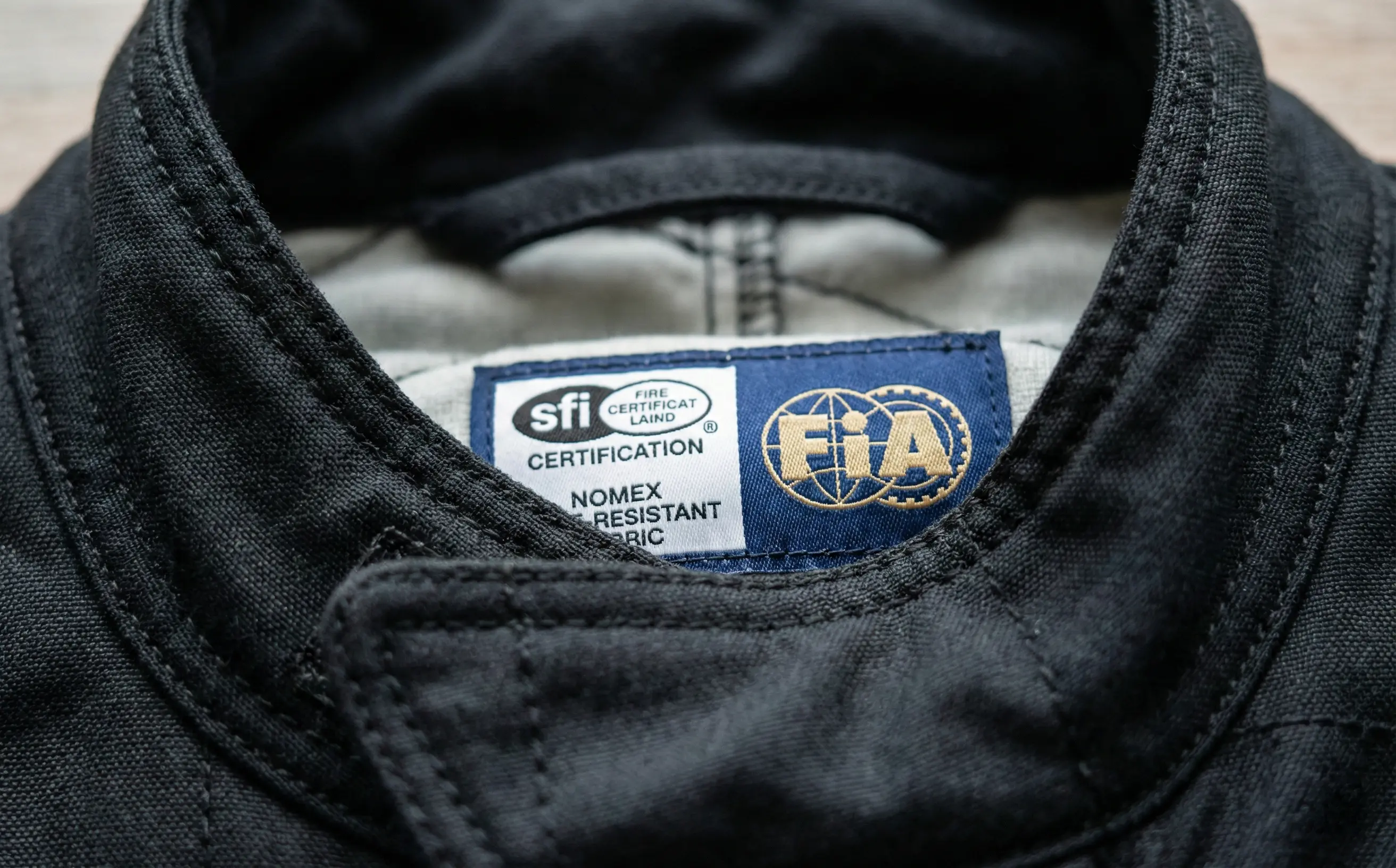
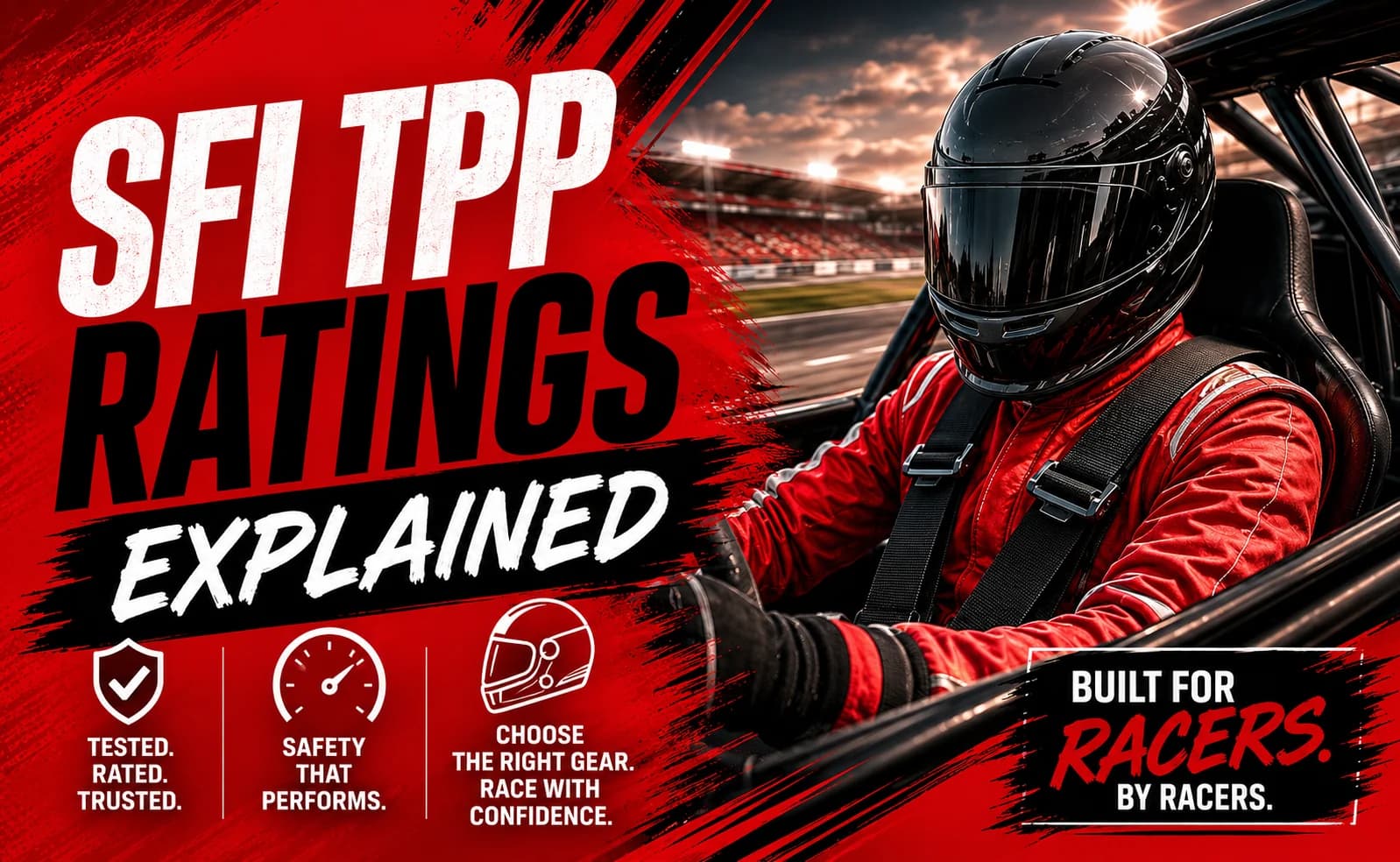
Confirm the rating meets or exceeds your series' minimum. For most circle track, road racing, and karting, that's SFI 3.2A/5. Drag racers running 9.99 ETs or faster typically need 3.2A/15 or 3.2A/20. If you're not sure, read our SFI ratings explainer — it walks through every rating by discipline.
2. Material — Genuine Nomex® vs. Generic FR
An "SFI-rated" suit can technically pass certification with cheaper fire-retardant treatments that wear off over time. Genuine Nomex® meta-aramid is inherently flame-resistant — the fibres themselves don't burn, regardless of age or washing. If the spec sheet doesn't say "Nomex" by name, ask.
3. Fit and Range of Motion
Sit in your race seat with helmet on, harness tight, hands on the wheel. Can you reach every control? Does the collar push your helmet forward? Does the suit ride up when you bend? Off-the-rack suits are cut for a 50th-percentile body. If you're not exactly that, the suit will fight you.
4. Construction Details
- Flat-felled or fully-bound seams (less abrasion in a slide)
- Real boot cuffs and storm flaps (keep fuel from pooling)
- Reinforced shoulder and knee panels
- Anti-fatigue or moisture-wicking inner liner
5. Look and Identity
Last on the list, but real. A suit that matches your livery, includes your name, and looks like part of a serious operation matters for sponsors, photos, and your own headspace getting into the car.
Custom vs. Off-the-Rack Aftermarket Suits
Off-the-rack aftermarket suits cost less and ship faster. Custom suits fit better, last longer, and look like they belong to you. Here's the honest trade-off:
Off-the-rack makes sense when:
- You're a standard size and the cut matches your body
- You need a suit fast (next race weekend)
- Budget is a hard constraint and you'll upgrade again in 1-2 years
- You're testing whether you'll stick with the discipline
Custom makes sense when:
- You're outside the 50th-percentile fit (tall, short, broad, narrow)
- You want your livery, sponsors, or team identity on the suit
- You're planning to race the suit for 3+ seasons
- You've already had fit issues with one or more off-the-rack suits
- You want SFI 3.2A/5 or higher with Nomex® at a price comparable to mid-tier off-the-rack
Worth Knowing
Custom doesn't always cost more than premium off-the-rack. HS Race Gear's HS Pro 1, Super, Rush, and Ace lines start at $329 — competitive with mid-tier off-the-rack — and you get measurement-perfect fit, unlimited mockup revisions, and Made-in-USA construction. See pricing →
When Is It Actually Time to Replace Your Suit?
Five signs your current suit is past its useful life:
- The SFI label is unreadable or detached
- You can see thinning, fading, or wear-through anywhere — especially at shoulders, knees, or seat
- The fabric smells of fuel or has stained beyond cleaning (contaminated FR fabric is a fire risk, not just cosmetic)
- Tech inspectors have flagged it at two consecutive events
- The fit has changed — you've gained or lost more than ~10 lbs and the suit no longer sits right
If you're not sure whether your suit has another season in it, ask your tech inspector before next race weekend. If they hesitate, replace it.