Home/Blog/SFI Ratings by Class

Discipline Guide

SFI Racing Suit Ratings
by Class

Sprint car, drag, dirt late model, karting, road racing — the exact SFI rating you actually need for your discipline, and why the rating goes up when the class does.

← Back to Blog

SFI Racing Suit Ratings by Class — Which Rating You Actually Need

A practical, discipline-by-discipline guide to picking the right SFI 3.2A rating for the car you actually race.

Every racer has had this moment: you're filling out an order form or staring at a suit on a shelf, and the rating reads SFI 3.2A/1, 3.2A/5, 3.2A/15, or higher. You know higher is more protection. You know your sanctioning body has a minimum. What you actually want to know is one thing: which rating do I need for what I race?

This guide answers that question for every discipline HS Race Gear builds for — sprint car, drag, dirt late model, road racing, karting, and powerboat. No fluff. If you want the background theory on what SFI ratings actually measure, read SFI Ratings Explained next. If you want to know what to order today, keep reading.


Quick Reference — SFI Rating by Discipline

This is the answer most racers actually need. Every line below assumes you're competing in a sanctioned event. Always confirm against your specific series' current rulebook — sanctioning bodies revise their tech requirements, sometimes mid-season.

  • Local autocross / track day: SFI 3.2A/1 — entry-level fire protection, single layer, breathable.
  • Sprint car (asphalt or dirt): SFI 3.2A/5 — multi-layer Nomex®, the standard floor for most weekly sprint divisions.
  • Dirt late model: SFI 3.2A/5 minimum, often 3.2A/10 for upper-tier touring series.
  • Stock car / circle track (asphalt): SFI 3.2A/5 for amateur/regional, 3.2A/10 or higher for NASCAR-tier classes.
  • Drag racing (sportsman, 10.00+ ET): SFI 3.2A/1 or 3.2A/5 depending on class.
  • Drag racing (faster than 9.99 ET): SFI 3.2A/15 or higher, jacket + pants required, head sock and gloves to match.
  • Top Fuel / Funny Car / fuel altereds: SFI 3.2A/20 with full layered head, neck, and hand protection.
  • Road racing (SCCA / NASA amateur): SFI 3.2A/5 typically — some classes accept FIA 8856 equivalents.
  • Karting (junior, cadet, senior): SFI 3.2A/1 in CIK-rated suits is almost always enough.
  • Shifter karting / KZ: SFI 3.2A/1 with reinforced abrasion panels — series may also require CIK Level 2.
  • Powerboat (APBA classes): SFI 3.2A/5 minimum for most performance classes; APBA tech may require additional buoyancy compliance.

The rule of thumb: as horsepower, top speed, and elapsed-time pressure go up, the SFI rating climbs in step. The cost of "more rating than I need" is comfort. The cost of "less rating than I need" is failing tech — or worse.

How to Read the SFI Rating on Your Suit Label

SFI Rating Label Macro

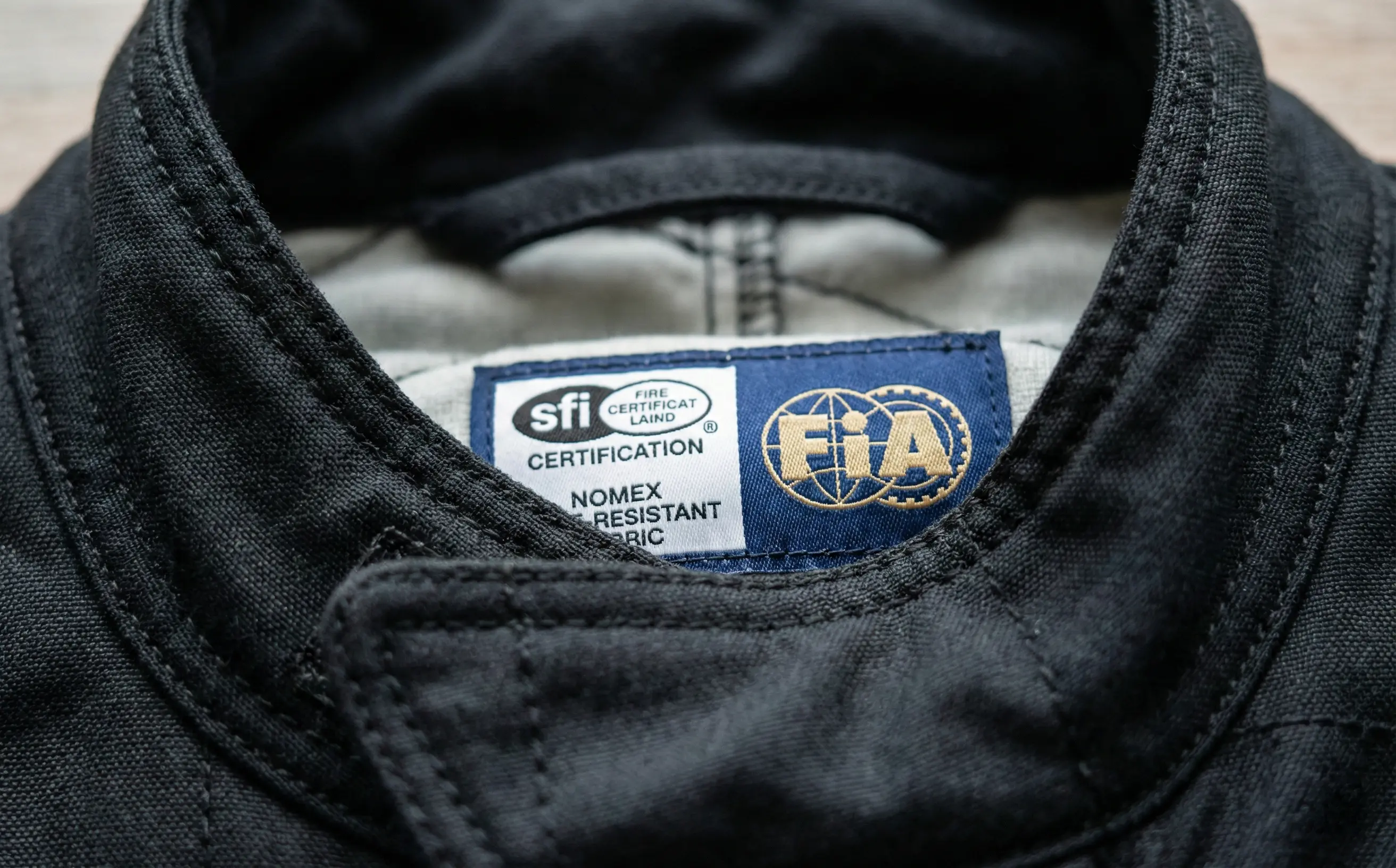
Every SFI-certified racing suit has a sewn-in label with the spec number, the rating, and the manufacturer details. Here's what each part actually means:

  • SFI Spec 3.2A — the standard for driver fire suits. (Other specs cover helmets, gloves, shoes, harnesses.)
  • The "/X" number — the rating tier. Higher = more layers of fire protection and a higher TPP score.
  • The certification date — when the suit was certified for compliance. Series rules vary on how long that certification stays valid.

If the label is faded, missing, or unreadable, the suit will not pass tech inspection — regardless of how protective the materials still are. SFI compliance is a paperwork standard as much as a materials one.

Sprint Car & Dirt Track — SFI 3.2A/5 Is the Practical Floor

Sprint Car Driver

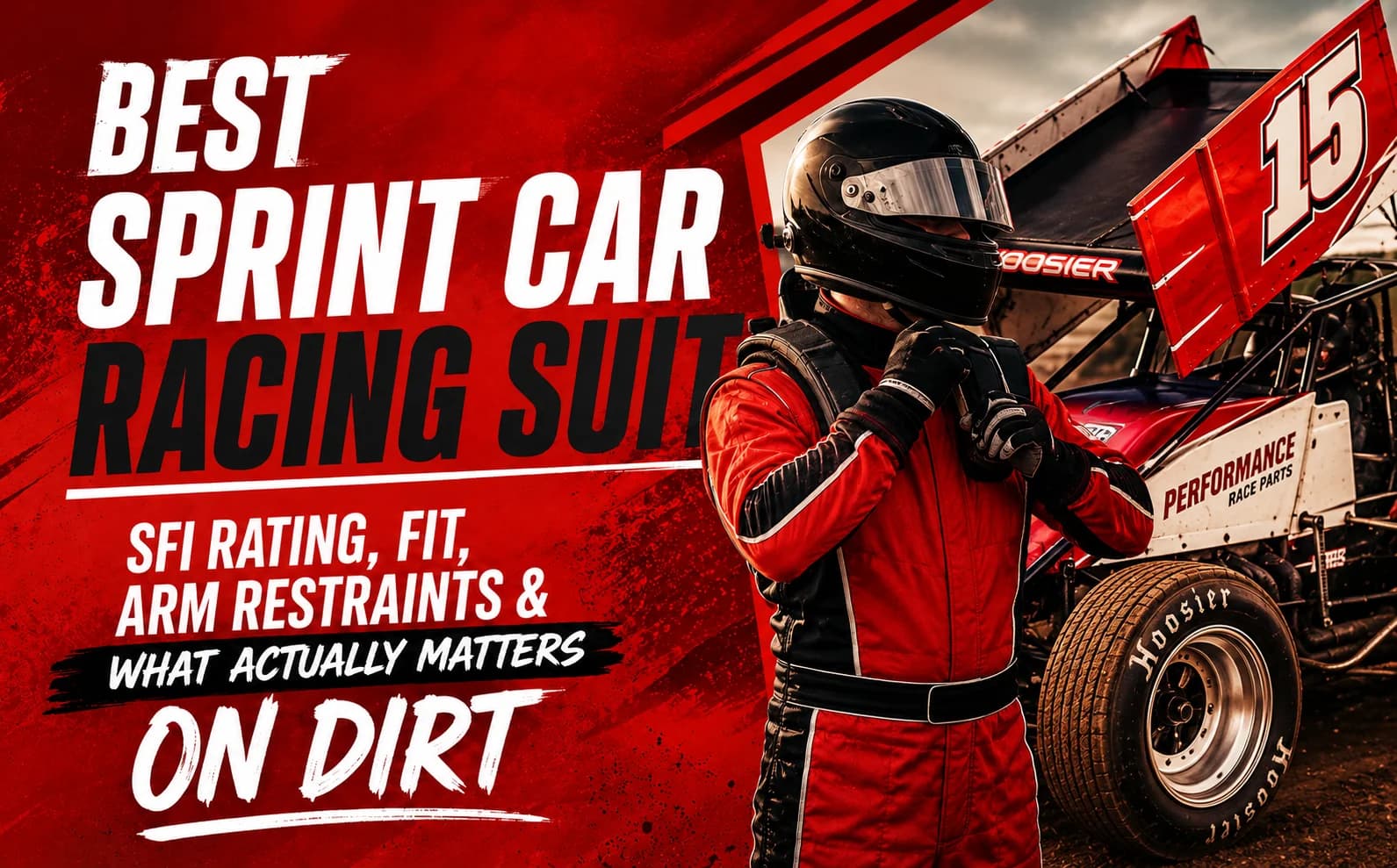
Sprint cars and dirt late models share a similar risk profile: open cockpit, methanol or high-octane gas, rapid fire potential after contact, and abrasion exposure if you're upside-down sliding through the infield. A single-layer SFI 3.2A/1 suit is technically allowed in some entry-level dirt divisions but it's the wrong tool for the job.

What we recommend for sprint car and dirt late model drivers:

  • Weekly amateur and regional series: SFI 3.2A/5, two-layer Nomex® construction, reinforced shoulder and knee panels.
  • Touring or upper-tier sprint car series (POWRi, USAC, World of Outlaws): SFI 3.2A/10, full multi-layer with arm-restraint compatibility.
  • Dirt late model touring (Lucas Oil, World of Outlaws Late Models): SFI 3.2A/5 minimum, but check your series — some specify 3.2A/10 for night events.

The reason SFI 3.2A/5 dominates dirt is simple: it gives you the multi-layer thermal protection you actually need, with enough breathability to survive 30 laps on a hot July night without overheating yourself. SFI 3.2A/10 adds protection for the higher-purse classes but at the cost of weight and warmth.

Drag Racing — Why Class ETs Drive the SFI Rating You Need

Drag Racer in Staging Lanes

Drag racing is the discipline where SFI ratings are most strictly tied to performance brackets. The faster you go, the higher the rating must be — and the rule isn't a suggestion. NHRA and IHRA tech officials will turn you away in line if your suit's rating doesn't match your timing slip.

The NHRA ET-to-rating ladder, simplified:

  • 14.00 ET and slower (Stock Eliminator, sportsman): No SFI suit required for most classes — long sleeves and pants are minimum.
  • 13.99 to 10.00 ET: SFI 3.2A/1 jacket minimum required for many classes.
  • 9.99 to 7.50 ET: SFI 3.2A/5 jacket and pants required. Head sock SFI 3.3 required.
  • Faster than 7.49 ET (Pro Stock, alcohol): SFI 3.2A/15 with full coverage.
  • Top Fuel / Funny Car / nitro classes: SFI 3.2A/20, integrated head and hand protection, regular recertification required.

Always cross-reference your specific class in the current NHRA Rulebook before ordering. Sportsman and bracket racing classes have their own variations, and outlaw classes set their own rules.

Heads-up

If you build your car faster than your suit is rated for, you don't qualify to race that pass — even if your suit is otherwise in perfect shape. Buy for the car you intend to build, not the one in the trailer today.

Karting — Why SFI 3.2A/1 Is Almost Always Enough

Junior Karting Driver

Karting is the discipline most racers ask the most questions about, because the SFI rating story is genuinely different here. Karts don't carry enough fuel for a sustained pool fire, the engines run cooler, and abrasion — not fire — is the primary injury risk in a kart-on-track or kart-on-barrier event.

As a result, most national karting bodies (WKA, SKUSA, Rotax Max Challenge USA) specify CIK-rated karting suits rather than higher SFI tiers. CIK suits are tested for abrasion resistance — exactly the failure mode that karting protects against — while still providing the fire-retardant baseline equivalent to SFI 3.2A/1.

  • Junior & Cadet (ages 8–12): CIK Level 2 sublimated suit, SFI 3.2A/1 equivalent fire-retardant baseline.
  • Senior (4-stroke and 2-stroke TaG): CIK Level 2, same fire-retardant baseline.
  • Shifter / KZ (highest karting tier): CIK Level 2 with reinforced abrasion panels; some series accept SFI 3.2A/1 with abrasion certification.

If a karting suit is sold as "SFI 3.2A/5 for karting," it's either over-built (which is fine but adds weight) or marketed wrong. CIK Level 2 with SFI 3.2A/1 baseline is the actual karting standard.

Road Racing, Endurance & Vintage — Series-Specific Quirks

Road racing in the US runs across a half-dozen sanctioning bodies, each with its own tech standards. The big rule: SFI is the dominant standard in the US, FIA 8856-2000 (or the newer 8856-2018) is the dominant standard internationally, and most US series accept either at the same rating tier.

  • SCCA Club Racing: SFI 3.2A/5 minimum for most classes. FIA 8856 accepted as an equivalent.
  • NASA road racing: SFI 3.2A/5 minimum.
  • IMSA Michelin Pilot / SRO America: FIA 8856-2018 required for professional classes; check the current technical bulletins.
  • Vintage racing (HSR, SVRA, VARA): SFI 3.2A/5 minimum. Period-correct exemptions exist for pre-1965 cars but the driver still needs modern fire protection.
  • Endurance (24 Hours of Daytona supporting series, 25 Hours of Thunderhill): SFI 3.2A/5 minimum with multi-driver-fit considerations — your suit needs to fit you *and* be quick to swap during pit stops.

Powerboat — APBA's Quiet SFI Requirements

Powerboat Racing

Powerboat racing has SFI requirements that are less well-known than auto-racing's because the sport is smaller and the rulebooks are harder to find online. APBA-sanctioned classes typically require:

  • Inboard hydroplane and offshore: SFI 3.2A/5 racing suit with secondary buoyancy compliance (the suit itself may not be buoyant — that's a separate vest/harness requirement).
  • OPC (Outboard Performance Craft): SFI 3.2A/5 or APBA-approved fire-retardant alternative.
  • Tunnel boats: SFI 3.2A/5 minimum; some classes require capsule-compliant gear.

The big difference vs auto racing: powerboat suits need to dry quickly between heats and tolerate salt water. Material selection matters more than the SFI number in this segment.

Common SFI Mistakes That Fail Tech

Six things that get racers turned away at tech inspection, in order of how often we see them:

  • Wrong rating for the class. The most common failure. SFI 3.2A/1 in a 9-second drag car. SFI 3.2A/5 in a Top Sportsman class that requires 3.2A/15. Read your rulebook for the *exact* class you'll run.
  • Expired or missing label. The label is the certificate. If it's washed out, peeled off, or never sewn in properly, the suit isn't legal even if the construction is identical to a properly-labeled one.
  • Mismatched accessories. A 3.2A/15 jacket with 3.3/1 gloves fails tech in classes that require all-3.2A/15 head-to-foot. The rating is system-wide, not just the suit.
  • "SFI-style" knockoffs. Imported suits that say "SFI compliant" or "SFI-style" but lack the actual SFI Foundation label. These never pass.
  • Fabric contamination. Fuel stains, oil burns, or chemical exposure can void compliance even with a valid label. Tech inspectors will flag visible contamination.
  • Wrong cut for the cockpit. Not a failure mode for tech, but a real safety issue: a suit that binds at the shoulders or rides up under harness compresses your range of motion. Custom-fit solves this completely.

How to Choose When Your Class Allows a Range

Most sanctioning bodies set a minimum SFI rating per class but don't cap the upper end. You're allowed to wear a 3.2A/15 suit in a class that only requires 3.2A/5 — but should you?

Three reasons to stay at the minimum rating:

  • Lower TPP weight, more breathability, less heat fatigue in long sessions.
  • More flexibility and easier ingress/egress under harness.
  • Lower replacement cost when you wear it out.

Three reasons to go up a tier:

  • You expect to move up a class in the next 12 months and don't want to buy twice.
  • Your car runs hot — methanol fuel, alcohol injection, header proximity — and you've personally felt the heat in the cockpit.
  • You race in a series where mid-season rule changes are common, and a one-tier buffer keeps you compliant if minimums move.
Custom · SFI Certified · Made in USA

Need a Suit That Matches Your Class?

HS Race Gear builds custom racing suits in every SFI rating from 3.2A/1 through 3.2A/15, made to your measurements in Watertown, MA. Premium Nomex® construction, unlimited mockup revisions, free shipping on custom suits.

NEWSLETTER

Subscribe to our newsletter

Home
Account
Shop
0
Cart
SIDEBAR ACCOUNT