Home/Blog/Endurance Racing Suits

Endurance Racing

Endurance Racing
Suits Explained

Le Mans is two weeks away. Here's what makes the world's best endurance racing suits different — and what amateur endurance racers actually need to finish a 24-hour event safely.

← Back to Blog

Endurance Racing Suits Explained — What Makes Le Mans Drivers' Gear Different (And What You Actually Need)

FIA 8856-2018, multi-driver fit, heat at hour 14, and the gap between professional Le Mans gear and what amateur endurance racers actually need.

The 24 Hours of Le Mans runs in two weeks. Across the Le Mans Hypercar, LMP2, and LMGT3 classes, every driver climbing into a car at Circuit de la Sarthe will be wearing a homologated FIA 8856-2018 racing suit — typically a $2,500 to $4,500 piece of equipment custom-fitted in Italy, the UK, or Japan. Watch the pit-lane footage on race day and you'll see why: 24-hour racing puts a suit through more thermal cycles, more sweat saturation, and more harness friction in one event than a weekend sprint racer's suit sees in two seasons.

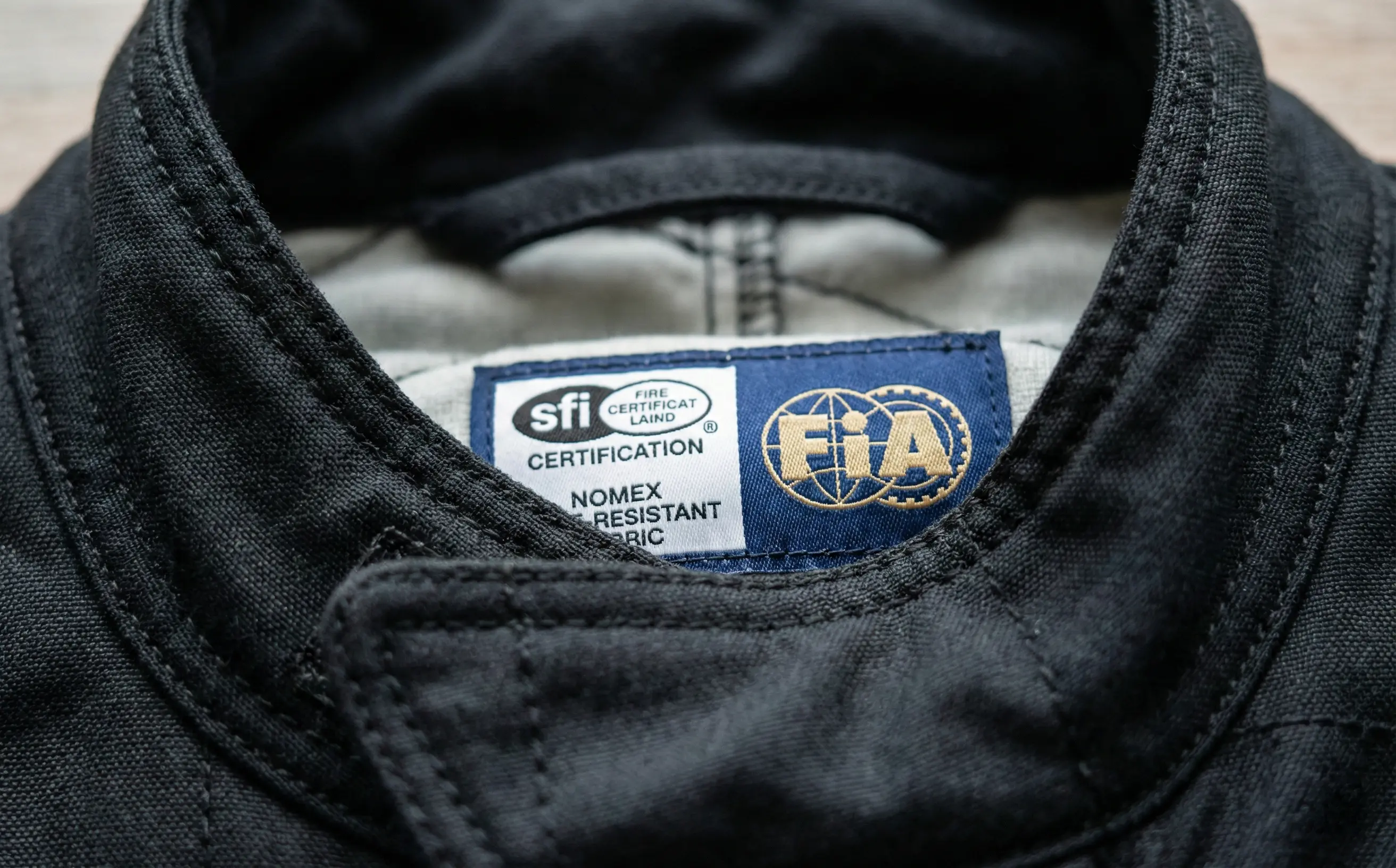
But here's the thing most articles about endurance racing suits get wrong. The Le Mans-spec suit isn't the standard for endurance racing — it's the standard for *professional* endurance racing. The thousands of amateur endurance racers running 24 Hours of Lemons, NASA Endurance, 25 Hours of Thunderhill, World Racing League, ChumpCar, and the Daytona supporting series don't need an FIA 8856-2018 suit. They need an SFI 3.2A/5 suit built for the way *they* actually race. There's a real gap between those two worlds — and that gap is where most amateur endurance racers either over-spend by 4× or under-protect themselves.

This guide walks through both. What the Le Mans pros wear and why, what amateur endurance racers actually need, and how to spec a custom endurance suit that survives a 24-hour event without bankrupting you.


What 24 Hours Actually Does to Your Racing Suit

Sprint racing is a series of brutal, short events. Endurance racing is one long, brutal event. The suit goes through things in 24 hours that a sprint suit doesn't see in a year:

  • Continuous sweat saturation. A driver doing a 3-hour stint in a 90°F+ cockpit sweats out 2–3 liters. Multiply by 4 drivers and the suit is soaked, partially dried, and re-soaked across 24 hours.
  • Repeated thermal cycling. Going from 95°F cockpit to a 65°F night stint and back during pit stops stresses the Nomex® fibre's elasticity.
  • Harness compression at the same spots for hours. The shoulders, hips, and collar bear constant load — abrasion + heat softens the construction.
  • Pit-lane transfers. Quick-release zippers and Velcro get used dozens of times. Cheap closures fail by hour 12.
  • Multi-driver wear. If 2–4 drivers share a single suit (legal in some classes), the fit compromises stack up.

A weekend sprint suit will technically pass tech for an endurance race. It just won't be enjoyable to wear by hour 14 — and "not enjoyable" in a race car is "not safe."

FIA 8856-2018 vs SFI 3.2A/5 — Which Standard Applies to You?

There are two parallel standards in serious motor racing:

  • FIA 8856-2018 — the international standard. Required for FIA-sanctioned championships, including World Endurance Championship, IMSA professional classes, and SRO international series. Tests heat-flux resistance, thread strength, and includes recertification protocols.
  • SFI 3.2A/5 — the dominant US standard. Required by SCCA, NASA, most US amateur endurance organizations, and many North American professional series. Tests fire resistance and TPP score with multi-layer construction.

The two standards are roughly equivalent at SFI 3.2A/5 ≈ FIA 8856-2018 in real-world fire protection. Where they differ is in testing methodology and documentation requirements — FIA suits have stricter manufacturer traceability, SFI suits have stricter periodic recertification rules. If you're running anywhere outside FIA-sanctioned global championships, SFI 3.2A/5 is the practical floor.

For our SFI rating-by-discipline breakdown, see this guide. The endurance section spells out the specific requirements by series.

What Le Mans Drivers Actually Wear (And Why It Costs $4,000)

Walk through a Hypercar or LMP2 paddock and you'll see suits from a small handful of homologated manufacturers — Sparco, OMP, Stand 21, Alpinestars Tech-Air. Every one of them is FIA 8856-2018 certified. What you're paying for at the Le Mans-spec level:

  • Three-layer Nomex® construction with proprietary thermal insulation cores
  • Stretch panels at the shoulders, elbows, and crotch for 3-point harness compatibility
  • Cordura abrasion patches at high-wear zones
  • Internal moisture-wicking liner with anti-bacterial treatment (matters at hour 14)
  • FIA-spec quick-release zippers tested to 500+ cycles
  • Custom embroidered sponsor and series compliance patches
  • Made-to-measure fit using 30+ body measurements

This is genuinely good gear. It's also genuinely overkill for 95% of racers reading this article. If you're not in a series that mandates 8856-2018, you're paying $3,000 extra for documentation overhead and a label.

What Amateur Endurance Racers Actually Need

If you race any of the following, here's what you actually need in a suit:

  • 24 Hours of Lemons / ChumpCar: SFI 3.2A/1 minimum, SFI 3.2A/5 strongly recommended. Comfort and ventilation matter more than rating here — these cars run sub-$500 build classes with limited fire risk.
  • NASA Endurance (Honda Challenge endurance, 25 Hours of Thunderhill): SFI 3.2A/5 minimum across the board.
  • World Racing League: SFI 3.2A/5 minimum.
  • SCCA endurance (Hoosier Super Tour endurance events, Majors endurance): SFI 3.2A/5 minimum.
  • IMSA Michelin Pilot Challenge (amateur-tier supporting): FIA 8856-2018 required by class rules.
  • Daytona supporting / Roar before the 24 supporting: Series-dependent — confirm at tech, but SFI 3.2A/5 covers most amateur-tier classes.

In every case except IMSA, an SFI 3.2A/5 custom suit built for endurance fits the regs and saves you 3–4× the cost of an FIA 8856-2018 suit.

Multi-Driver Fit — When 2 to 4 Drivers Share a Car

Most amateur endurance teams run with 3 or 4 drivers per car. Rules don't usually require each driver to have their own suit (helmets and HANS devices are personal — suits less so in non-FIA classes), but in practice each driver should have their own custom-fit suit because:

  • A suit cut for a 6'2" driver compresses badly on a 5'8" teammate
  • A wet suit from a previous stint is unpleasant and increases skin-irritation injury risk
  • Pit-stop driver changes are faster when each driver suits up before their turn
  • Custom suits cost less per-driver when ordered as a team batch (HS Race Gear team pricing applies at 3+ suits)

Team Tip

Spec the whole team's suits with matching graphics and individual driver names. Order them together so the lead times sync. Most amateur endurance teams that look professional started this way — not because they had a sponsorship deal, but because they batched their order with the same maker.

Heat Management at Hour 14

This is the single biggest difference between a "passes tech" suit and a "you can actually finish the race" suit. By hour 14, a driver in the wrong suit is dehydrated, fatigued, and making mistakes that look like driver error but are really equipment failures.

What helps in heat:

  • Two-layer Nomex® (not three or four) — every extra layer trades fire margin for heat retention. SFI 3.2A/5 is two layers, and that's the sweet spot for endurance
  • Stretch knit panels at the underarms, sides, and back — drop core temp by allowing convective cooling
  • Moisture-wicking inner liner — Coolmax or similar wicks sweat away from the skin so the Nomex® stays dry
  • Mesh or perforated boot cuffs — small vent area at the ankles makes a measurable difference
  • Lighter overall color where allowed (some series ban white) — radiant heat absorption is real

Cool-shirt and helmet-cooling systems work with the suit, not instead of it. The suit's job is to not block the cooling system from working.

Pit-Lane Transitions — Quick Swaps Without Fumbling

In sprint racing the pit stop is the engineer's problem. In endurance racing it's the driver's. Your suit needs to come on and off fast, and stay closed once you're strapped in. What matters:

  • YKK or equivalent quality main zipper — cheap zippers stick when wet or when full of brake dust
  • Storm flap with hook-and-loop closure — keeps zipper hidden and reinforces fuel barrier
  • Boot cuffs that slide over your race shoes easily — Nomex elastic, not cotton-blend
  • Cuff Velcro at wrists — keeps gloves sealed; cheap Velcro fails by hour 18
  • Internal drink-tube grommet — saves you fishing it out at the pit during driver change

Your Custom Endurance Suit Spec Checklist

If you're about to order a custom suit for an upcoming endurance event, hand this checklist to your supplier. If they can't deliver every item, find a different supplier:

  • SFI 3.2A/5 certification (or FIA 8856-2018 if your series requires)
  • Two-layer genuine Nomex® meta-aramid construction (not blends)
  • Stretch panels at underarms, sides, and inner elbows
  • Moisture-wicking inner liner — confirm by name (Coolmax, etc.)
  • YKK or equivalent main zipper with storm flap
  • Reinforced shoulder panels for harness wear
  • Cordura or Kevlar abrasion patches at knees and seat (off-road and motocross-adjacent endurance only)
  • Drink-tube grommet pre-installed
  • Custom embroidered driver name + national flag
  • Team livery graphics — color-matched across all team suits
  • Made to your measurements, not size chart approximation
  • Lead time you can verify in writing before payment

HS Race Gear's custom endurance suits hit every item on this list, start at $329, and ship from Watertown, MA. We've spec'd suits for 24 Hours of Lemons crews, NASA endurance teams, and Daytona supporting-series racers across the US.

Common Endurance Suit Mistakes

Six things we see endurance teams get wrong, in rough order of how often:

  • Buying a sprint suit and hoping it works for 24 hours. Technically allowed in most amateur series. Practically miserable by hour 10.
  • Overspending on FIA 8856-2018 when SFI 3.2A/5 is sufficient. Common in teams that copy what they see on TV.
  • Skimping on the moisture-wicking liner. A $50 upgrade that pays back in every stint.
  • Mismatched driver gear across the team. Three drivers in three different brand suits looks unprofessional and signals an undisciplined operation to sponsors.
  • Not pre-washing the suit before the race. First washing shrinks Nomex® by 1–2% — discover this at home, not during driver change at hour 4.
  • Forgetting the cooling-system grommets at order time. Adding them later costs more than ordering them built-in.
Team Pricing · Custom · Made in USA

Custom Endurance Suits, Built for the Long Stint

HS Race Gear builds custom SFI 3.2A/5 endurance racing suits with two-layer Nomex®, stretch panels, moisture-wicking liners, and team livery. Built to your measurements in Watertown, MA. Team pricing at 3+ suits. Free shipping on custom suits.

NEWSLETTER

Subscribe to our newsletter

Home
Account
Shop
0
Cart
SIDEBAR ACCOUNT