Best Sprint Car Racing Suit — SFI Rating, Fit, Arm Restraints & What Actually Matters On Dirt
A practical guide to picking a sprint car racing suit that passes USAC, World of Outlaws, and ASCS tech inspection — and survives a season of Friday-night dirt.
Sprint car season is in full swing — World of Outlaws, USAC, ASCS Sprint Cars, and POWRi all running weekly programs across the country. Knoxville Nationals is two months out. If you're shopping for a sprint car racing suit right now, you're either gearing up for the rest of the summer or getting the right gear in place before the late-season majors. This guide walks through exactly what makes a sprint car suit different from a generic SFI suit, what your sanctioning body actually requires, and what to look for when you order custom.
Sprint car racing has a unique risk profile that most off-the-rack suits weren't designed around — open cockpit, methanol fuel, dirt slung at 100+ mph through the wing's wake, and arm-restraint mounting points that have to clear the suit's shoulder construction. Buy the wrong suit and you'll either fail tech or be the driver fighting their gear instead of the car.
What Makes a Sprint Car Racing Suit Different
Four things distinguish a real sprint car racing suit from a generic SFI 3.2A/5 you might wear in a circle-track stocker:
- Arm-restraint compatibility. Sprint cars require arm restraints — straps attached to the shoulder harness that prevent your arms from being flung outside the cockpit in a flip. The suit's shoulder construction has to accommodate the restraint anchor points without bunching.
- Dust seal at the collar and cuffs. A 30-lap dirt feature throws enough clay dust into the cockpit to coat the inside of an open-collar suit. Sprint suits use higher collars, elastic cuffs, and storm flaps to seal out dust.
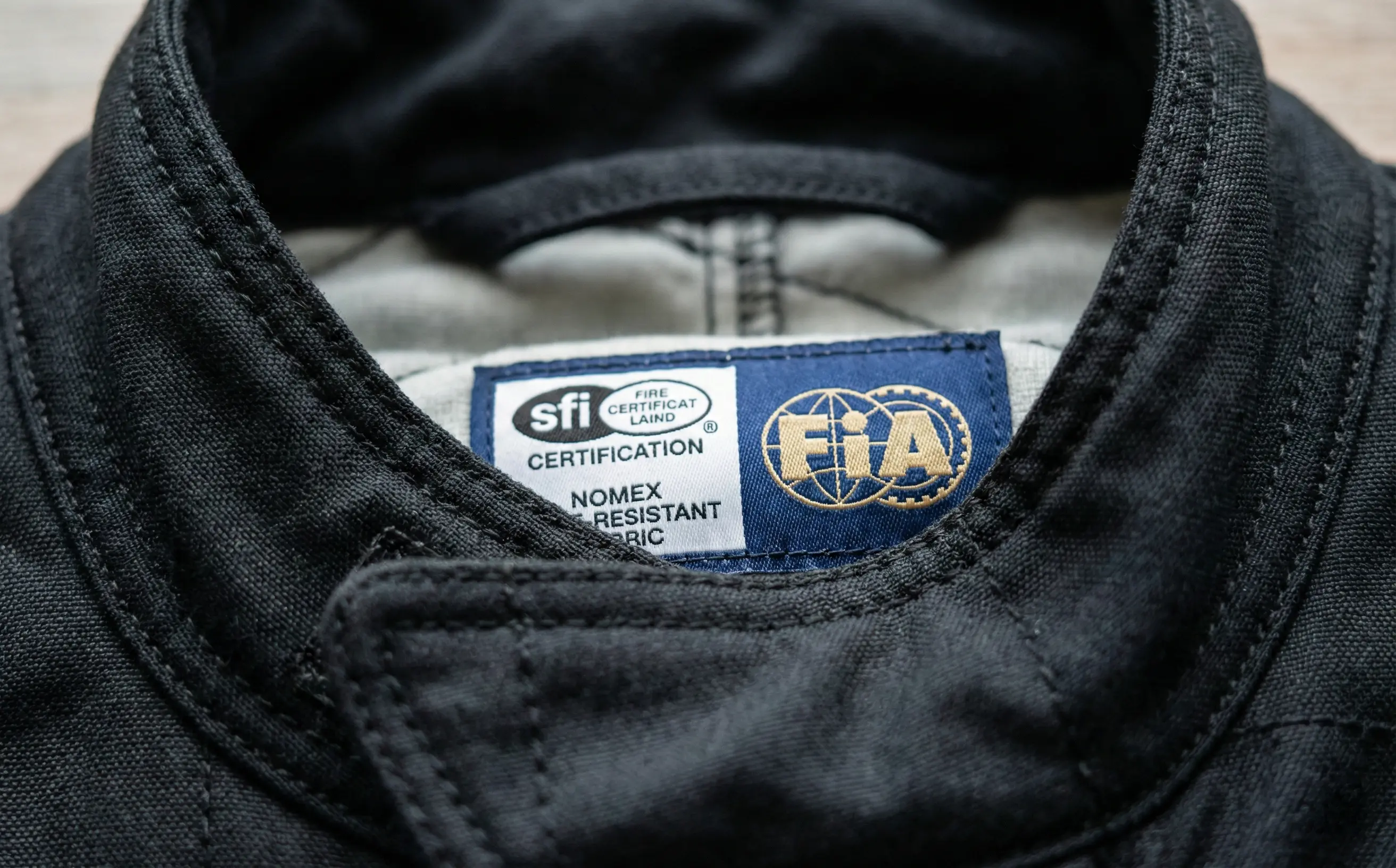
- Methanol-specific fire protection. Most sprint car classes run methanol, which burns with a nearly-invisible flame and can pool under the seat unnoticed. SFI 3.2A/5 multi-layer Nomex® is the practical floor — single-layer 3.2A/1 doesn't give you the seconds you need to bail.
- Abrasion-resistant shoulder and knee panels. Sprint flips are violent and you're getting dragged across packed clay. Reinforced shoulders and knees keep the SFI Nomex® intact through the slide.
A standard SFI 3.2A/5 suit will technically pass sprint car tech inspection in most weekly divisions. Whether it'll protect you on the night you actually need it — that's a different question.
SFI Requirements by Sanctioning Body
Every major sprint car series has its own technical bulletin. The minimum-rating story by sanctioning body, current as of the 2026 season:
- World of Outlaws (Late Models & Sprint Cars): SFI 3.2A/5 minimum, fire-resistant underwear strongly recommended.
- USAC (Silver Crown, Sprint, Midget): SFI 3.2A/5 minimum across all divisions. Arm restraints SFI 3.3 mandatory.
- ASCS Sprint Cars: SFI 3.2A/5 minimum for 360 and 410 classes.
- POWRi: SFI 3.2A/5 minimum across National Midget, Outlaw Micro, and West Region Sprint.
- Weekly track (IMCA-style modified-sprint or hobby-class sprint): SFI 3.2A/1 may be accepted, but 3.2A/5 is what most weekly tracks specify for any winged sprint.
- Lucas Oil Empire Super Sprints / All Star Circuit of Champions: SFI 3.2A/5 minimum.
If you race across multiple sanctioning bodies in a season, build to the strictest one — usually that's USAC. For the full breakdown by class, see our SFI rating-by-class guide.
Arm Restraint Compatibility — The One Spec People Forget
Arm restraints are non-negotiable in sprint car racing. They attach to your shoulder harness and prevent your arms from being flung out of the cockpit during a flip — sprint cars roll, and arms outside the cage get crushed. Most racers know this. What gets forgotten when ordering a custom suit:
- The suit's shoulder panel construction can't bunch under the restraint anchor
- The shoulder seam needs to lie flat under the harness webbing — bunched seams cause hot spots over a 25-lap feature
- Custom suit makers should ask whether you run arm restraints (HS Race Gear's measurement form does)
- If you've worn a suit that pinched under the restraint after lap 15, that's the construction failing — not your fault
Custom Order Tip
When you submit measurements for a custom sprint car suit, tell the maker which arm restraint system you use and which sanctioning body you race. Good shops cut the shoulder panels accordingly — flat-felled seams, reinforced webbing zones, no excess fabric where the restraint anchors.
Dirt vs Asphalt — What Changes in the Spec
Asphalt sprint and dirt sprint use the same SFI rating but have different real-world demands:
- Dirt sprint priorities: Higher collar (dust seal), elastic cuffs at wrists and ankles, abrasion patches at shoulders and seat, darker color exterior (clay shows less between heat races), removable inner liner (wash dust out between events).
- Asphalt sprint priorities: Lighter weight construction (asphalt is hotter, less wind in the cockpit means less convective cooling), brighter color graphics OK (no dust to mask), full-coverage knee panels (asphalt slides are abrasive even at lower speeds).
If you cross over between dirt and asphalt in a season — common in USAC Silver Crown and some regional sprint series — order the dirt-spec build. It'll over-perform on asphalt; the reverse isn't true.
Methanol — Why It Changes Everything
Most sprint car classes run methanol. Methanol burns with a nearly-invisible blue flame that's hard to see in daylight and almost impossible to spot at a lit track at night. It also pools under the seat if a line leaks, soaking into the seat foam and your suit before you realize what's happening.
Two things this means for your suit:
- Multi-layer construction (SFI 3.2A/5 minimum) isn't optional. Single-layer 3.2A/1 gives you 3 seconds before a second-degree burn. Multi-layer gives you 7–10. With invisible methanol fire, those extra seconds are the difference between rolling out and an ICU stay.
- Replace your suit if it's been soaked in methanol. The fuel doesn't just dry out — it can degrade the Nomex® bonding agents and reduce TPP score. If you've had a leak, get the suit inspected (or just replace it).
If you race methanol, the math on suit cost is brutal: a $600 custom SFI 3.2A/5 suit costs less than one night in a burn unit. There's no good reason to save $200 by running a 3.2A/1 in a winged sprint.
Custom Fit for Sprint Car — Why It Matters More Here
Sprint car cockpits are tight. You sit upright with knees forward against the firewall, hands on a small steering wheel, head straight back against the headrest. Off-the-rack suits cut for a generic sedan-driver posture bind in this position — at the shoulders, at the inner thigh, and across the chest.
Three measurements that matter more for sprint car than any other discipline:
- Across-the-back shoulder width — drives the harness fit. Too wide and the harness slides off the shoulder when you wheel hard.
- Sitting torso length — drives the suit length so it doesn't ride up under the harness when seated.
- Inner thigh length — the lower 1/3 of the suit binds first if this measurement is off by even 1 inch.
This is why custom-measured beats off-the-rack for sprint car specifically. The cockpit demands more from the suit than almost any other open-cockpit discipline. For the full measurement guide, see our custom fit tips post.
Common Sprint Car Racing Suit Mistakes
Six things we see sprint car drivers get wrong, in rough order of how often:
- Buying a 3.2A/1 single-layer for a methanol-burning class. Most common, most dangerous. SFI 3.2A/5 should be the floor for anything running on the alcohol side.
- Ignoring arm-restraint anchor compatibility. The suit binds under the harness after lap 10 — and you're stuck with it for the season.
- Skipping the dust seal at the collar. Open-collar dirt suits look cool. Then you finish a heat race coated in clay and realize the collar is the problem.
- Wrong cut for the seating position. Off-the-rack suits cut for a stock-car-style cockpit pinch in a sprint car. Custom-fit solves this.
- Hand-me-down suits from a different driver. Sprint car custom fit is unforgiving — a teammate's suit cut for a 5'10" frame won't fit you at 6'1" even if the SFI label is still good.
- Not replacing after a known fuel exposure. Methanol degrades Nomex® bonding agents. If you've had a leak, the suit's TPP score has dropped — get it inspected or replace.
Knoxville Nationals Prep — Order Now
Knoxville Nationals runs August 13–16, 2026 — about 10 weeks away. Custom sprint car racing suit lead times for the major makers are typically 4–6 weeks from approved mockup. That means if you want a new suit on your back for Knoxville, the design conversation needs to start in early-to-mid June.
The teams that show up to Knoxville looking professional are the ones that ordered in June, approved the mockup in mid-June, and had the suit in hand for a tune-up race in late July. The teams that show up in mismatched off-the-rack gear are the ones that ordered in early August. Plan accordingly.